
Summary (What This Blog Covers):
A massive winter storm caused 2000 flights cancelled US storm disruptions across major airports.
Key hubs like Chicago O’Hare and Minneapolis experienced extreme shutdowns and empty terminals.
Airlines issued travel waivers as US flight cancellations and delays spread nationwide.
Thousands of passengers were stranded, with rebooking, delays, and airport chaos everywhere.
In this guide, we explain what happened, who was affected, and what travelers should do next.
2000 Flights Cancelled US Storm: What Really Happened Across Major Airports?
The phrase “2000 flights cancelled US storm” suddenly started trending across travel news when a powerful winter storm swept across the Midwest and northern United States. Airports that normally handle thousands of passengers per hour became unusually quiet.
Reports show that more than 2,200 flights were cancelled in a single day, accounting for nearly 78% of all global flight cancellations during that time. The hardest-hit airports included Chicago O’Hare International Airport and Minneapolis–St. Paul International Airport, where snowstorms, heavy winds, and freezing temperatures forced airlines to suspend operations.
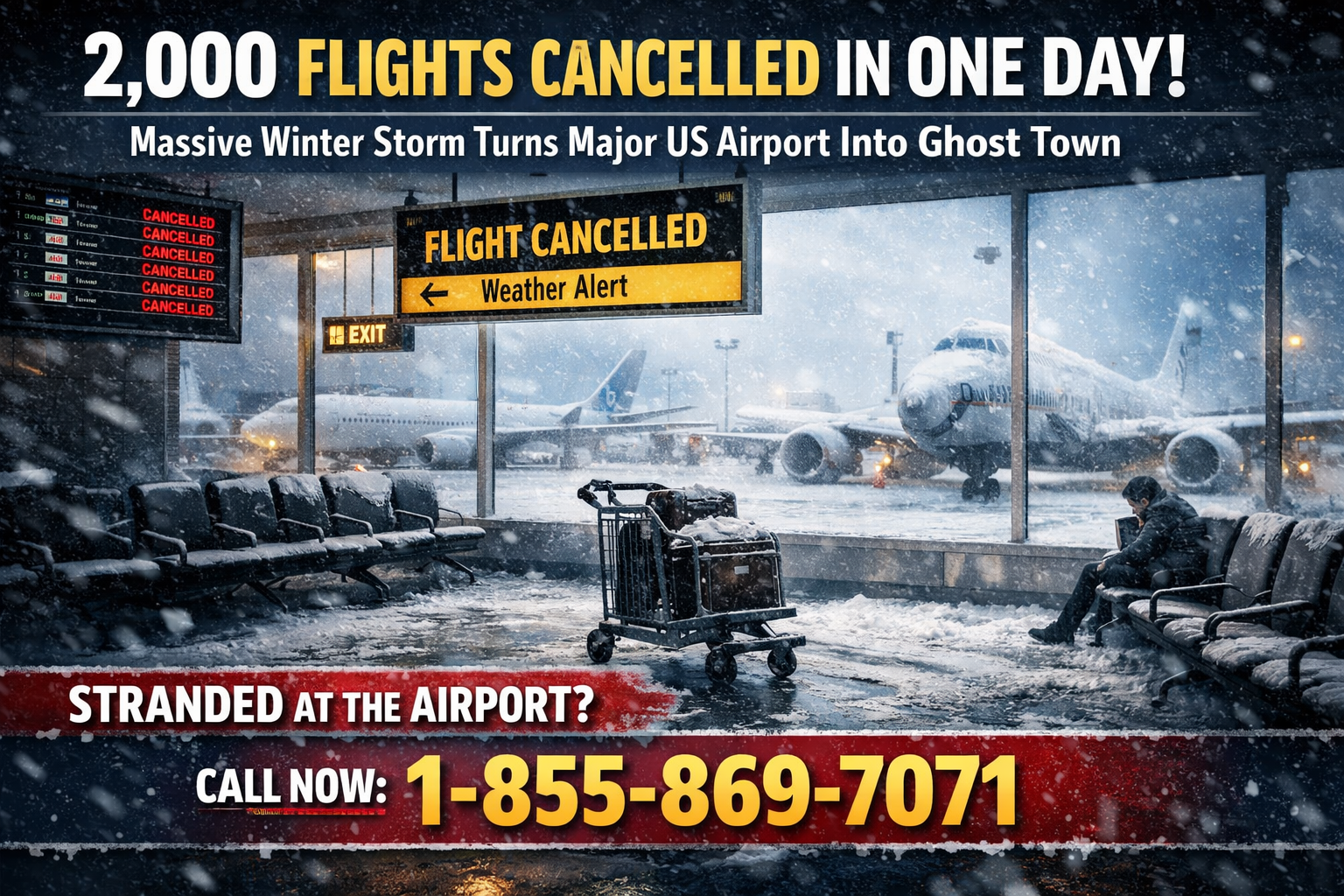
For many travelers, it felt shocking. People who arrived expecting busy terminals suddenly saw empty gates, closed check-in counters, and grounded planes. Some passengers described the airports as a “ghost town.”
At airfarepolicies, we often hear from travelers during major disruptions like this. If your flight was affected by the 2000 flights cancelled US storm, you can always reach our travel support team at +1-855-869-7071 for help with rebooking or flight change guidance.
2000 Flights Cancelled US Storm: How Airlines Responded to the Crisis
When the 2000 flights cancelled US storm situation escalated, airlines had to make quick decisions to protect passengers and crew. Flying during extreme snowstorms can be dangerous because aircraft require safe visibility, runway traction, and de-icing procedures.
Most major airlines activated emergency policies and travel waivers. These policies allow passengers to change or rebook flights without paying heavy penalties.
At airfarepolicies, our team noticed many travelers were confused about their rights. If you’re stuck due to the 2000 flights cancelled US storm, you can contact us anytime at +1-855-869-7071 for guidance.
Common airline responses included:
Waiving change fees for affected flights
Offering free rebooking within a certain travel window
Allowing travelers to cancel for travel credit
Adjusting flight schedules to move aircraft safely
Providing updates through airline apps and notifications
Because of network disruptions, airlines may need 24–72 hours to fully recover schedules, especially when aircraft and crews are out of position.
US Flight Cancellations Surge as Severe Winter Storm US Flights Disrupt Travel
Winter storms are one of the biggest reasons for US flight cancellations every year. But this event was particularly severe because it affected several major connecting hubs simultaneously.
The storm brought:
Heavy snowfall
Powerful winds
Low visibility
Runway icing conditions
These factors made it impossible for aircraft to safely land or depart.
According to reports, over 6,800 flights were also delayed nationwide, causing ripple effects throughout the aviation network.
Airports across the country—from Atlanta to Denver—experienced delays because planes and crews were stuck in affected cities.
Read Also :- 2K flights canceled in single day
Chicago O’Hare Airport Flights Cancelled: The Epicenter of the Storm
One of the most affected airports during the 2000 flights cancelled US storm event was O’Hare International Airport.
Chicago’s airport handles thousands of flights daily, making it a crucial hub for connecting flights across the United States.
During the storm:
Nearly 790 flights were affected at O’Hare.
Many runways required continuous snow clearing.
Airlines paused departures until weather conditions improved.
What Travelers Experienced at O’Hare
Before we look at the specific impacts, it’s important to understand how disruptions felt for passengers inside the airport.
Many travelers described confusion, frustration, and long waits while airlines worked to reorganize schedules.
Key issues travelers faced:
Long lines at airline counters
Uncertainty about rebooking
Difficulty finding hotel accommodations
Overcrowded customer service lines
Constant gate changes and announcements
This is why planning ahead during storms is always important.
Minneapolis Airport Storm Disruption Turns Terminal Into a Ghost Town
The situation was even more dramatic at Minneapolis–Saint Paul International Airport, which saw the highest percentage of flight cancellations.
Reports revealed:
73% of departing flights cancelled
64% of arriving flights cancelled
More than 726 flights grounded in one day.
Normally busy terminals looked almost empty. Only a few passengers and airport staff were present as snowstorms continued outside.
Why Minneapolis Was Hit Hard
Before listing the reasons, let’s understand the geography. Minneapolis is located in a region that frequently experiences extreme winter weather.
During this storm, several factors worsened the disruption:
Heavy snow accumulation
Extremely low temperatures
Runway icing risks
Limited visibility during landing
These conditions forced airlines to cancel flights for safety.
Delta American United Flights Cancelled: Airline Network Disruption
Major carriers including Delta Air Lines, American Airlines, and United Airlines all reported significant cancellations.
Because these airlines operate hub-and-spoke networks, disruptions at one major hub can spread across the country.
How Airline Networks Were Affected
When the 2000 flights cancelled US storm hit, several cascading problems occurred:
Aircraft stuck in snow-affected cities
Crew scheduling disruptions
Maintenance delays
Limited gate availability
These operational challenges caused thousands of additional delays nationwide.
US Airport Ghost Town Flights: What Travelers Saw During the Storm
To understand the scale of the disruption, imagine arriving at one of the busiest airports in America—and seeing almost nobody there.
Passengers reported scenes like:
Empty departure halls
Dark gate areas with no boarding activity
Closed airport shops and restaurants
Idle aircraft covered in snow
For many travelers, the experience felt surreal.
Normally, airports like Chicago or Minneapolis are filled with thousands of people. But during this storm, many terminals looked like a “virtual ghost town.”
Airlines Cancel Flights US Weather: Why Storms Stop Air Travel
Weather is the number one reason airlines cancel flights in the United States.
Before listing the exact reasons, let’s understand that aviation safety rules are extremely strict. If weather conditions cross certain thresholds, airlines must cancel flights immediately.
Common weather-related cancellation reasons
Snow accumulation on runways
Icing conditions on aircraft
Dangerous crosswinds
Lightning storms
Poor visibility for landing
Even if the weather improves quickly, it may take many hours for airlines to restore normal operations.
Severe Weather in Mid-South Causes Flights Cancelled at Memphis Airport
While Chicago and Minneapolis were the main hotspots, the storm also affected other airports such as Memphis International Airport.
Flights in the Mid-South region were cancelled due to:
Severe weather bands
Snowfall and freezing rain
Disruptions to connecting flights
Travelers who planned connections through Memphis also experienced delays or cancellations.
Typhoon Ragasa Impact: Additional Global Weather Disruptions
Although the 2000 flights cancelled US storm was mainly caused by winter weather, global aviation was also monitoring another major weather event — Typhoon Ragasa.
Typhoons in the Pacific region can indirectly impact global aviation schedules because airlines reposition aircraft and crews.
How Typhoon Ragasa Could Affect Flights
Before listing impacts, it’s important to understand that typhoons create massive atmospheric disturbances that influence flight paths.
Possible impacts include:
Flight rerouting across the Pacific
Delayed cargo operations
Aircraft repositioning challenges
Airport closures in Asia-Pacific regions
This combination of global weather events sometimes creates complex aviation disruptions.
What Passengers Should Do If Their Flight Is Cancelled
When travelers hear about US flight cancellations due to storms, panic is a common reaction. But there are several practical steps you can take.
Before listing the steps, remember that airlines typically prioritize safety and recovery.
Steps travelers should follow
Check your flight status before leaving home
Use airline apps for instant updates
Request free rebooking during weather waivers
Keep travel insurance documents ready
Consider alternate airports if possible
You can also contact airfarepolicies support at +1-855-869-7071 if you need help understanding rebooking options.
Table: Major Airports Impacted by the Storm
AirportFlights CancelledMain ReasonChicago O’Hare790+Snowstorm & runway icingMinneapolis–St. Paul726+Heavy snow & visibility issuesAtlanta80+Network disruptionsDenver60+Storm ripple effect
This table shows how a single storm can affect multiple airports across the network.
Graph: Estimated Flight Disruptions
Flights Cancelled (Approx.)Chicago O’Hare ██████████████████ 790Minneapolis MSP ████████████████ 726Atlanta ATL ████ 87Denver DEN ███ 60Other Airports █████████ 500+
This visual shows how major hub airports absorb the largest share of disruptions.
How Long Will Recovery Take After the Storm?
Air travel doesn’t recover instantly after a massive disruption like the 2000 flights cancelled US storm.
Typically:
Day 1: Most flights cancelled
Day 2: Limited operations resume
Day 3–4: Airline networks stabilize
Passengers should expect limited seat availability for several days after the storm.
Conclusion
The 2000 flights cancelled US storm event shows how quickly weather can disrupt global aviation.
A powerful winter storm turned major hubs like Chicago O’Hare and Minneapolis airports into near-empty terminals while thousands of travelers struggled with rebooking and delays.
With more than 2,000 flights cancelled and thousands delayed, airlines were forced to activate emergency policies and recovery plans.
If you’re traveling during storm season, always check your flight status early, keep backup plans ready, and know your rebooking rights.
For assistance with flight changes, cancellations, or travel guidance, you can reach support at +1-855-869-7071.
FAQs
What caused the 2000 flights cancelled US storm event?
A massive winter storm with heavy snow, strong winds, and freezing temperatures forced airlines to cancel over 2,000 flights across the United States.
Which airport had the most cancellations?
Chicago O’Hare and Minneapolis–St. Paul airports were the most affected, with hundreds of flights cancelled.
Why do airlines cancel flights during storms?
Airlines cancel flights to ensure passenger safety when weather conditions create dangerous landing or takeoff situations.
Are passengers eligible for refunds during weather cancellations?
Usually airlines provide rebooking or travel credits rather than refunds for weather-related cancellations.
How can I check if my flight is cancelled?
You should check airline websites, mobile apps, or airport flight trackers before heading to the airport.
How long do flight disruptions usually last?
Major storm disruptions can affect flight schedules for 2–4 days until aircraft and crew positions stabilize.
Can I rebook my cancelled flight for free?
Most airlines provide travel waivers during severe weather events, allowing free rebooking within a certain timeframe.
What should I pack during winter travel?
Carry warm clothing, chargers, snacks, and important travel documents in case of long delays.
Are airports safe during storms?
Yes, airports have strict safety protocols, but operations may pause until conditions improve.
Who can help me with flight rebooking?
You can contact airline customer service or travel assistance platforms like support at +1-855-869-7071.